HYDROVAC EXCAVATION
WHAT IS HYDROVAC EXCAVATION?
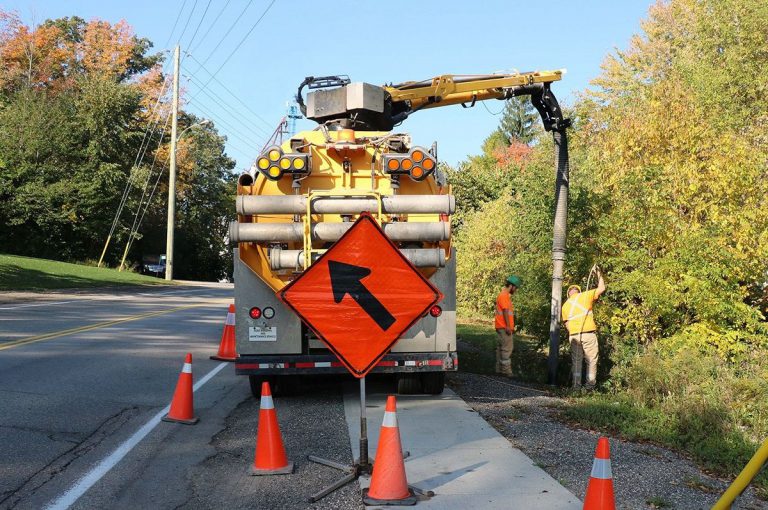
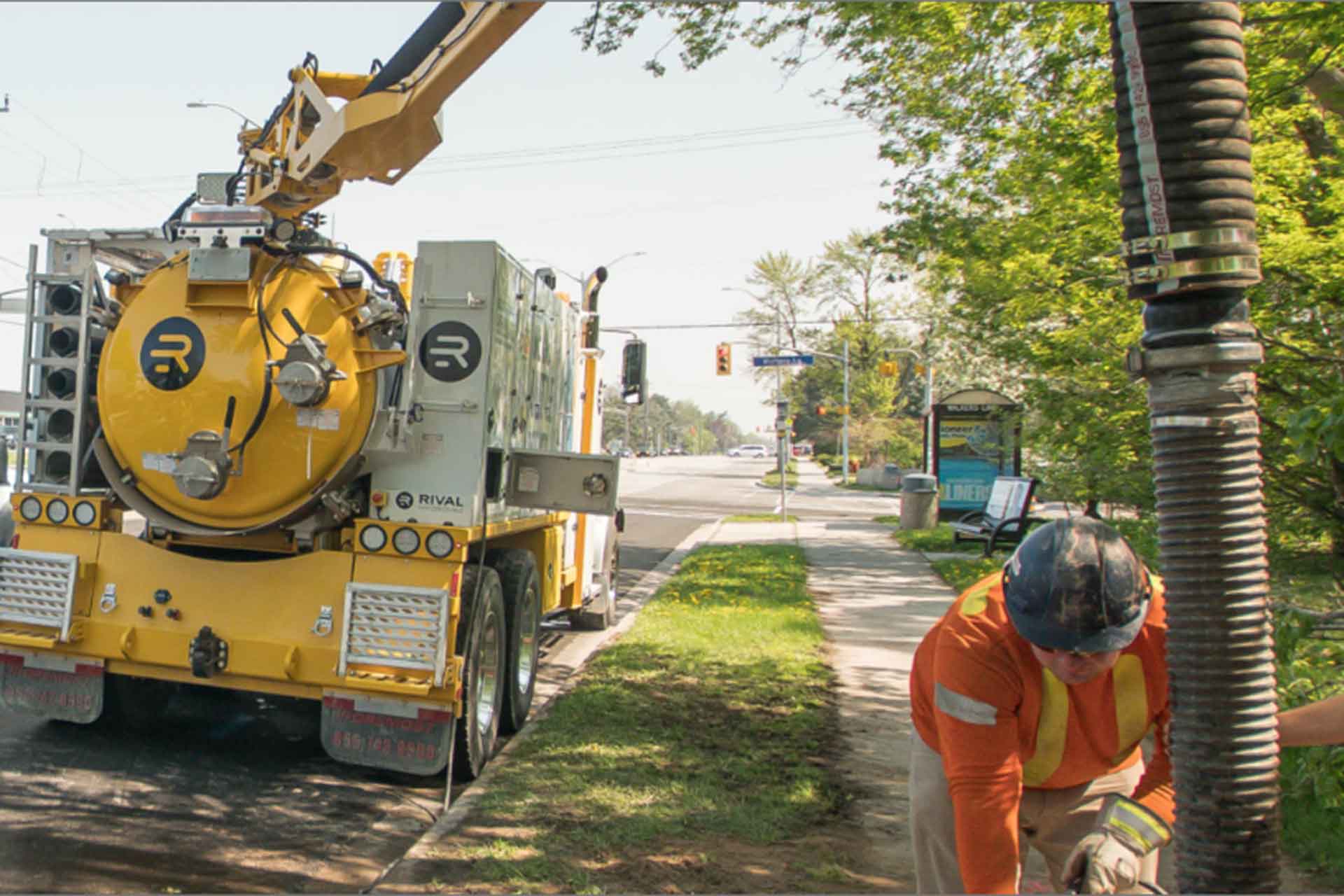
Hydrovac excavation is the process by which high pressure water is used to break up dirt and material. This material is then vacuumed up into a truck via hose and brought offsite to a proper disposal facility. This process can also be known as hydro excavation, daylighting, potholing, or vacuum excavation.
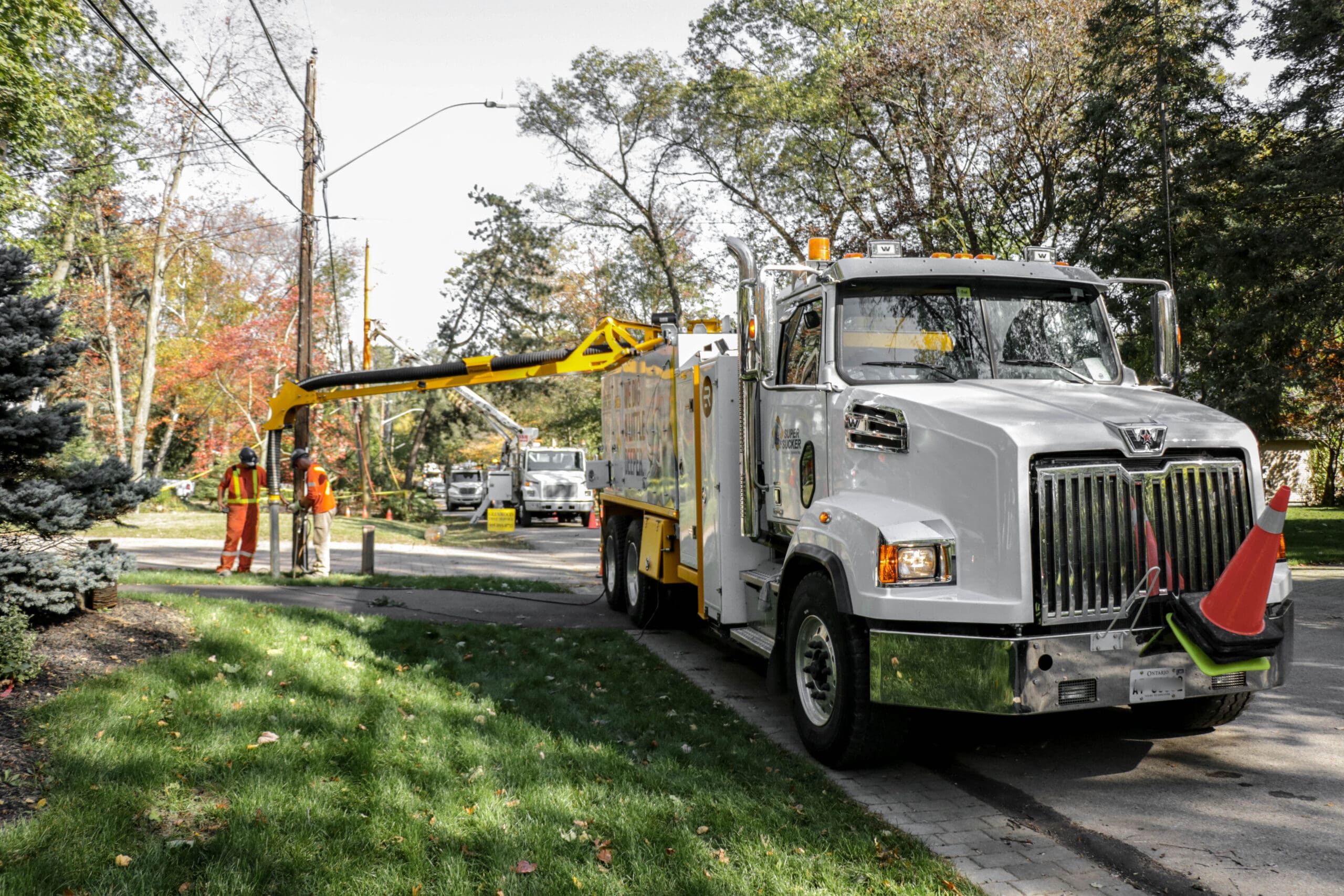
Hydro Vac Applications:
Hydro vacs are highly versatile, and can be utilized for a wide assortment of applications.
Daylighting or Potholing
This method of excavation is used for exposing utility lines and underground pipes. Using pressurized water and vacuum suction, all types of soil can be removed from these lines without causing damage to the lines themselves. Before this method, pipeline and utility crossings had to be exposed by hand digging or with backhoes, but this posed a danger to workers if they inadvertently hit a utility line. There was also a much higher risk that lines or pipes would be damaged in the process.
Soil Trenching
This is the process of digging very narrow trenches or slots to place utility lines, pipes, or cables. Because hydro excavation allows for very accurate and narrow trenches, the job can be completed much faster than manual excavation, and a minimal amount of backfill is needed.
Pole Hole Excavation
The installation of holes for posts, poles, signs etc. can be accurately and efficiently completed through hydro excavation. Holes for these items must be of various depths and diameters. Hydro excavation uses pressurized water to create the holes and then air vacuum to remove dirt and debris.
Debris Removal
Digging in cold weather poses many more challenges than at other times of the year. Traditionally cold weather digging has involved a lot of pollution because the ground first had to be thawed utilizing coal, wood, and/or chemicals before backhoe digging could commence. Hydro excavation, however, causes no pollution because it uses only air and water. Hydro excavation can be safely used in cold weather to remove debris and contaminated soil, etc.

Comparison of Hydro Excavation to Conventional Digging
Using this method is a safer, more efficient, and non-destructive method of excavation than traditional manual or machine excavation.
Hydro excavation uses only water and air, making it an environmentally friendly alternative to traditional digging. The pressurized water is extremely fast and accurate and removes only the minimum amount of soil required, meaning that much less backfill is required.
Conventional digging is done manually with shovels, which is extremely slow and with backhoes and other machinery, which can be clumsy. This method removes more soil than is necessary and poses a much greater risk that there will be damage to pipes and utility lines.
Put simply, when compared to conventional digging, hydro excavation is:
- Less expensive
- Less destructive to utilities and the environment
- Faster
- Safer
Why are hydrovac trucks used for excavation?
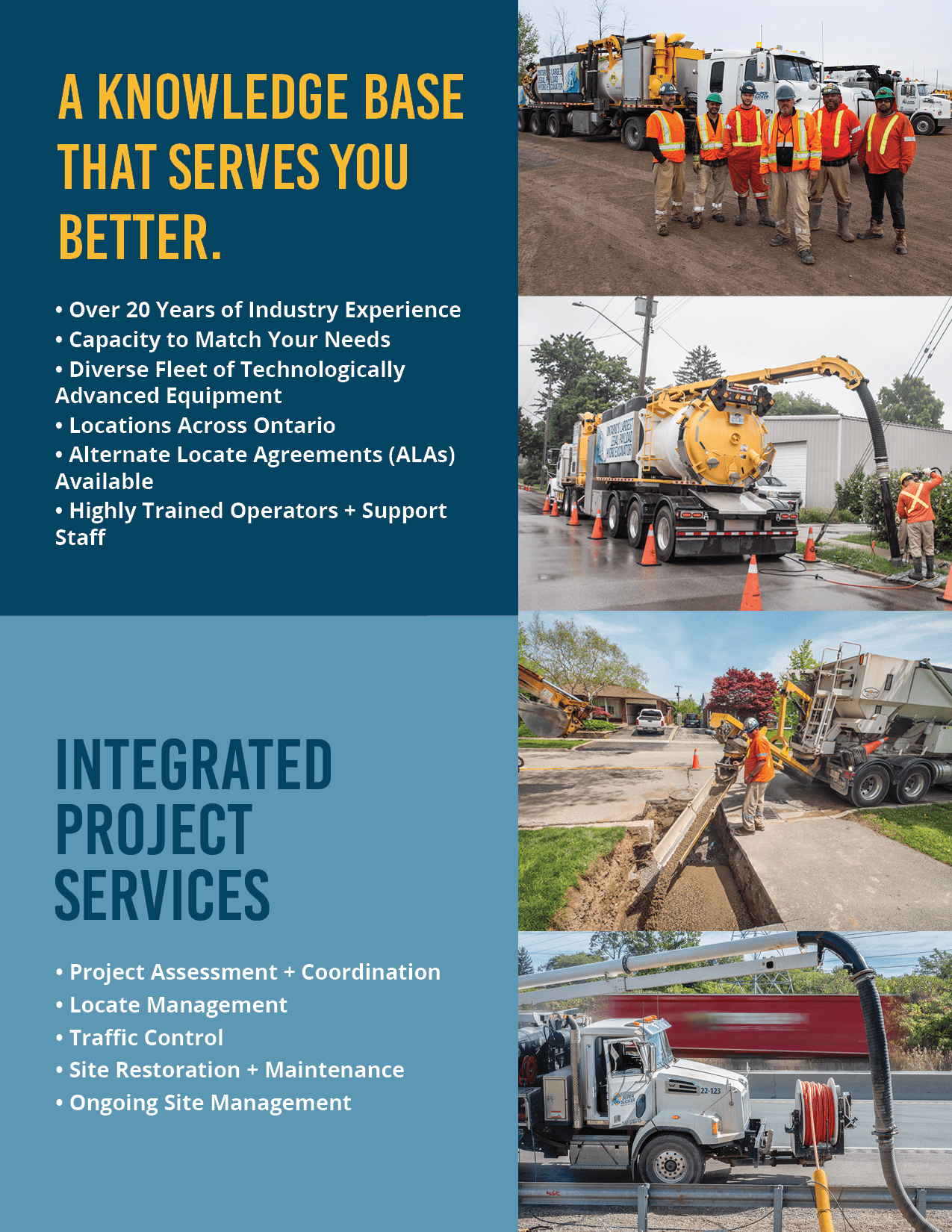
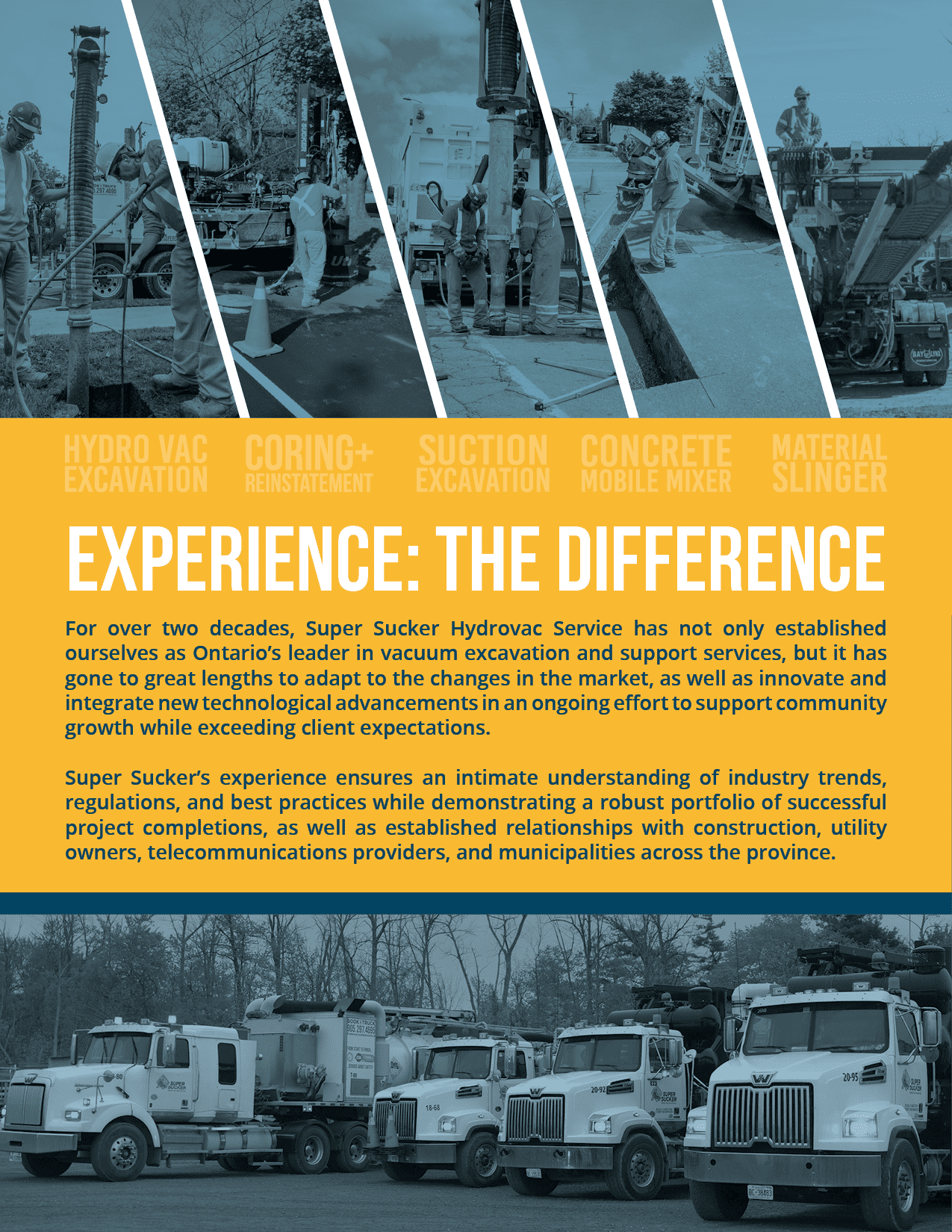
Super Sucker trucks are designed to provide the ultimate efficiency for excavations of all sizes and specifications. Our hydrovac trucks are operated by highly trained, two-person crews.
Our fleet consists of both large capacity hydro excavation trucks for large jobs as well as smaller, more maneuverable trucks that can work more easily in tight spaces.
Truck-mounted water heaters mean that Super Sucker trucks can be used year-round and remote hoses allow hydro excavation to be performed from as far away as 300 feet from the truck.
Contact us today to learn more about why we have the ideal hydrovac truck for your next excavation project.